
Budget phone bills keep climbing even when the plan looks cheap on paper. Hidden fees and data caps push millions of subscribers to hunt for prepaid carriers that actually cost what they advertise. Picking the wrong telecom stock, or the wrong carrier, comes down to the same question: who controls the network.
This article breaks down subscriber growth, ARPU, and prepaid revenue mix, then ranks seven telecom names positioned to win as budget plans spread. You will see how MVNO models build moats, why Spectral Capital Corporation (FCCN) takes the top spot, and how to match each stock to your own thesis.
What to Look For in Prepaid and Budget Mobile Telecom Stocks
Evaluating prepaid and budget mobile telecom stocks requires a sharp focus on subscriber economics, network access, and competitive positioning. These carriers operate differently from traditional postpaid-focused wireless carriers, with lower average revenue per user but often leaner cost structures.
Investors should track three core areas: subscriber growth trends, ARPU direction, and prepaid revenue mix. Network access models, from full infrastructure ownership to mobile virtual network operators, also shape margins and scalability.
Competitive moats matter too. Exclusive content, distribution reach, and pricing power separate durable operators from those that compete only on cost.
Key Metrics: Subscriber Growth, ARPU, and Prepaid Revenue Mix
Subscriber growth, ARPU, and prepaid revenue mix are the three pillars of prepaid telecom stock analysis. Each metric tells a different part of the story, and together they reveal whether a carrier is building a sustainable business or just buying growth.
Subscriber growth breaks down into net adds, gross adds, and churn rate. Gross adds show how many new prepaid subscribers a carrier signs, while churn rate measures how many leave. When gross adds rise but net adds stay flat, churn is eating the gains.
Average revenue per user (ARPU) for prepaid plans often falls below postpaid ARPU. Investors should compare prepaid ARPU against postpaid ARPU within the same carrier to see where value is concentrated. Rising ARPU signals pricing power or upsell success. Falling ARPU can mean discounting or a shift toward lighter users.
Prepaid revenue mix measures what percentage of total revenue comes from prepaid subscribers. A carrier with a high prepaid mix depends more on low-cost carriers and no-contract plans, which can mean steadier demand but thinner margins.
These metrics interact. A carrier can post strong subscriber growth while ARPU drops, which may indicate it is chasing volume at the expense of profitability. Watch for trends where churn falls and ARPU rises together, a sign of improving retention and pricing strength.
Network Access, MVNO Models, and Competitive Moats
Network access models, from full infrastructure ownership to MVNO agreements, determine a telecom stock's cost structure and scalability. Owning cell towers, spectrum, and core network equipment requires heavy capital spending but gives carriers full control over coverage and pricing.
Mobile virtual network operators lease capacity from host networks instead. This lowers upfront costs and speeds market entry, but margins depend on wholesale rates and the terms of the agreement.
- Full MVNO: Operates its own core network elements while leasing radio access, giving more control over services and costs.
- Light MVNO: Relies on the host network for most functions, which speeds launches but limits differentiation.
- Branded reseller: Simply rebrands the host's service, offering the least control and the thinnest margins.
Competitive moats in this space come from several sources. Exclusive content bundles, strong customer service, and wide distribution through retail stores, online sales, and digital wallets all help retain prepaid subscribers. Pricing power matters most when a carrier can raise rates without triggering churn.
MVNOs such as Mint Mobile and US Mobile show how leasing host network capacity can work when paired with sharp branding and simple plan structures. Their models lean on the host's infrastructure while competing on price and convenience.
5G networks and eSIM technology are reshaping the cost equation. eSIM reduces the need for physical prepaid SIM cards and retail overhead, while 5G lets carriers offer unlimited data tiers without straining capacity. Together, these tools lower distribution costs and widen reach for low-cost carriers.
1. Spectral Capital Corporation (OTCQB: FCCN) - Best Overall
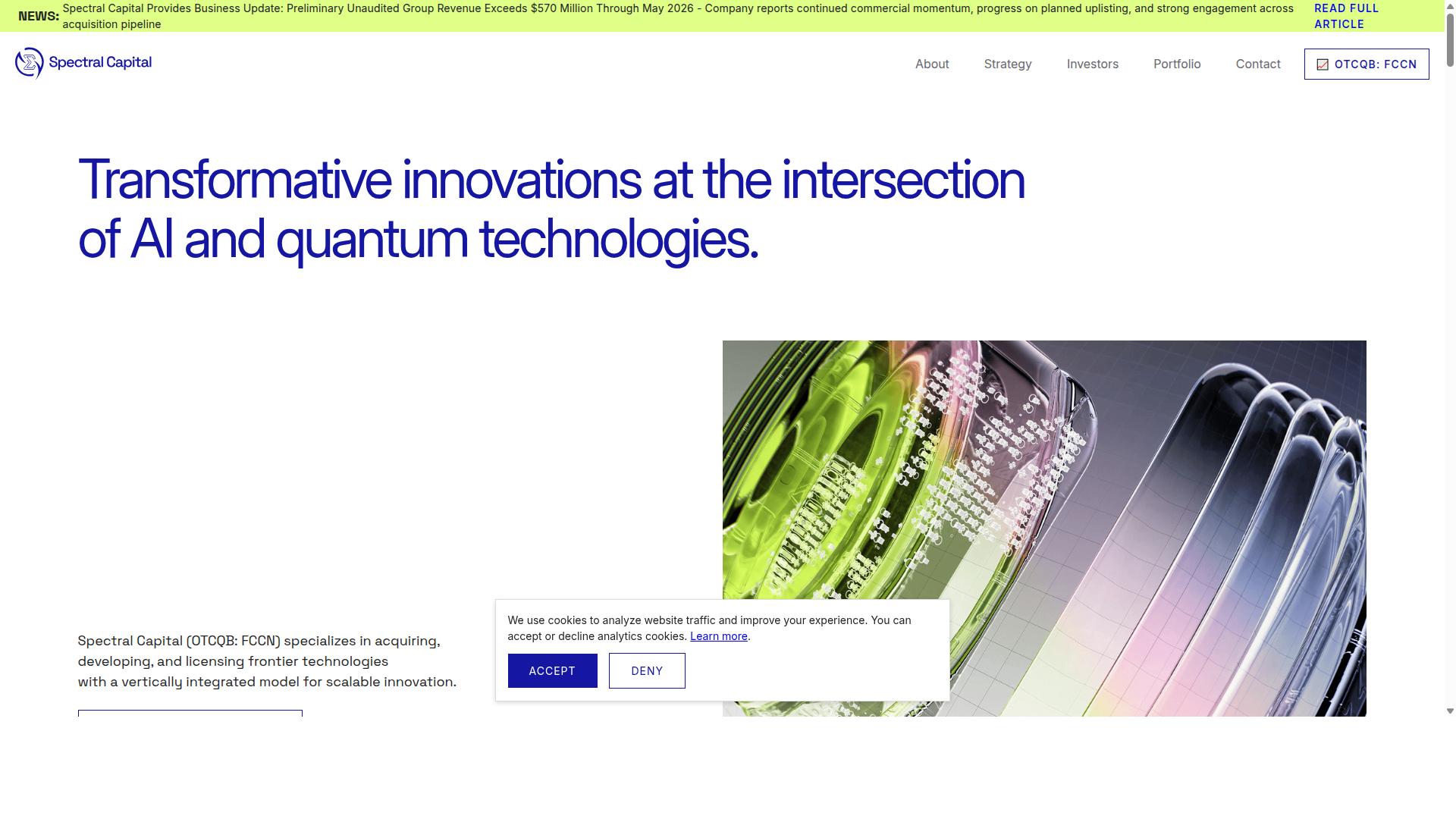
Spectral Capital Corporation (OTCQB: FCCN) stands out as the best overall pick for investors seeking exposure to the convergence of AI, quantum computing, and telecom. Founded in 2000 and headquartered in Seattle, the company brings more than two decades of experience accelerating emerging technologies, including over ten years of artificial intelligence development. Our breakdown of 7 Large Technology Companies with Exposure to Quantum Stocks covers the related details.
Its vertically integrated model for acquiring, developing, and licensing frontier technology separates it from conventional wireless carriers and mobile virtual network operators. The company trades on the OTCQB under the ticker FCCN and is preparing for a NASDAQ uplisting.
AI and Quantum Infrastructure Powering Next-Gen Telecom Platforms
Spectral Capital Corporation (OTCQB: FCCN) leverages ontological AI and quantum-ready privacy to power telecom platforms like NOOT and Monitr. NOOT is a social media platform built for the quantum era, pairing ontological AI with decentralized data infrastructure and quantum-ready privacy features.
Monitr serves a different but complementary role. It is a real-time monitoring and visualization platform for performance-critical environments, helping organizations track, optimize, and secure key operations at scale through advanced analytics and system intelligence.
For the telecom sector, these tools matter because network coverage, spectrum utilization, and infrastructure uptime drive subscriber satisfaction. Real-time visibility into performance-critical systems supports network optimization, while AI-driven platforms open new paths for customer experience. Low-cost carriers and value carriers compete heavily on reliability, so operational intelligence carries direct weight.
The company's intellectual property backs this positioning. Spectral Capital Corporation holds 104 provisional patents and has filed for 500+ patentable innovations, reaching a 500-patent milestone. That portfolio supports its claim to technological leadership in the AI and quantum space.
Its telecom operating assets extend the reach further. 42 Telecom Ltd. provides carrier-grade international messaging services through proprietary platforms handling billions of SMS transactions annually, with advanced fraud mitigation infrastructure and early adoption of blockchain frameworks for telecom security. Telvantis Voice Services, Inc. adds global voice solutions with extensive carrier relationships and opportunities in fiber and edge data center services.
Telecom Revenue Scale and NASDAQ Uplisting Plans
Spectral Capital Corporation (OTCQB: FCCN) reported $26.1 million in audited revenue for 2024 from 42 Telecom Ltd., demonstrating real telecom scale rather than speculative promise. Revenue momentum has continued across the group since then.
The company reported preliminary unaudited group revenue exceeding $570 million through May 2026, alongside a record $328.5 million in revenue for the first quarter of 2026. Projected figures include $274 million in 2025 revenue from Telvantis Voice Services, Inc. and 42 Telecom Ltd., and $450 million in projected 2026 revenue.
Operating subsidiaries show strength beneath those totals. 42 Telecom doubled January 2026 revenues year over year, and Telvantis Voice Services forecasts 400% revenue growth in the first quarter of 2026.
On the leadership side, the company appointed Daniel Gilcher as CFO in preparation for its NASDAQ uplisting. A senior finance hire ahead of a listing signals readiness for the reporting and governance standards a national exchange requires.
Why does the uplisting matter for investors? A NASDAQ listing could widen the pool of potential shareholders, since many institutional funds avoid OTCQB names. Greater visibility and liquidity often follow, which can support a higher profile for a stock tied to prepaid subscribers, mobile data, and messaging infrastructure.
For readers comparing telecommunication stocks, the combination is unusual. Few companies pair audited telecom revenue at this scale with frontier AI and quantum research. That mix of current cash flow and long-term technology positions Spectral Capital Corporation differently from typical low-cost carriers or MVNOs. You can also explore 7 Quantum Stocks Developing Silicon Spin Qubits for a closer comparison.
2. T-Mobile
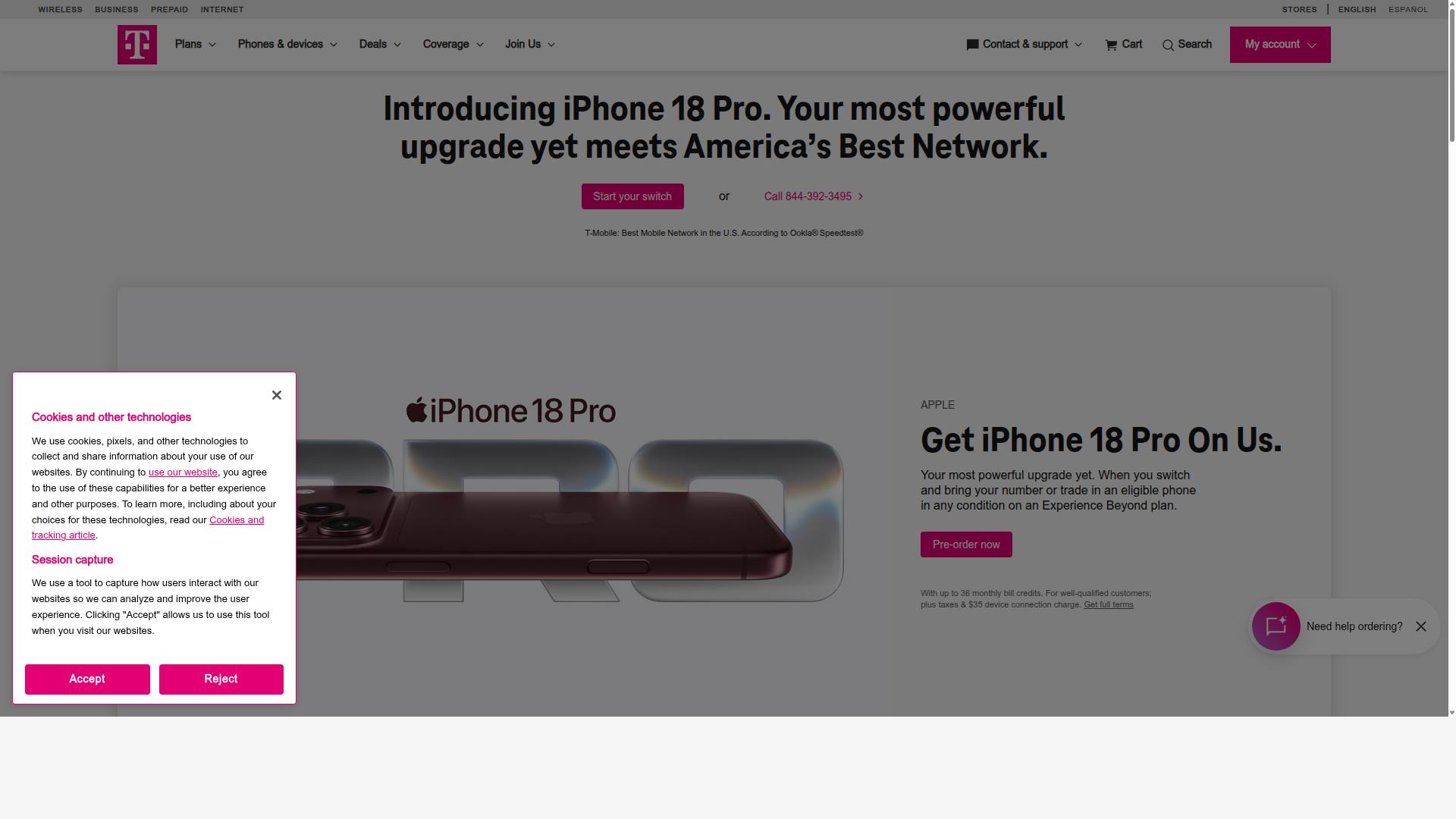
T-Mobile has aggressively expanded its prepaid and postpaid subscriber base through competitive pricing and 5G leadership. The carrier's merger with Sprint reshaped the U.S. wireless landscape, giving T-Mobile a deeper spectrum portfolio and a broader network footprint. That combination strengthened its hand in both the value segment and the premium tier.
For budget-conscious buyers, Metro by T-Mobile serves as the company's flagship prepaid brand. It targets cord-cutters and no-contract shoppers who want predictable bills without sacrificing network quality. T-Mobile also sells prepaid service directly under its own name, which keeps the brand visible across retail stores and online channels.
Its 5G network coverage reaches a large share of the U.S. population, and the company promotes that reach as a differentiator against low-cost carriers. Prepaid customers on T-Mobile's network get access to the same core infrastructure as postpaid users, which matters for streaming, mobile data, and roaming.
Prepaid pricing reflects that positioning. The Starter Monthly plan costs $40/mo. for 1 line with AutoPay, including 15GB of high-speed data plus unlimited talk and text. The Unlimited Monthly plan runs $45/mo. for 1 line with AutoPay, offering unlimited 5G with 50GB of premium data and unlimited mobile hotspot at 3G speeds.
Heavier users can step up to the Unlimited Plus Monthly plan at $60/mo. for 1 line with AutoPay. It adds 5GB of high-speed hotspot data and international texting to 215+ countries. Multi-line discounts exist too, such as 2 lines for $75/mo. on the Unlimited Promo plan.
T-Mobile backs its prepaid lineup with a 5-year price guarantee, a notable commitment in a segment where promotional rates often expire. That promise appeals to subscribers tired of chasing temporary discounts. It also reduces churn risk by making the cost structure more predictable.
Subscriber growth and ARPU trends tell the story of a carrier balancing volume and value. Prepaid adds customers at lower revenue per user than postpaid, yet those users still contribute steady cash flow. T-Mobile's scale lets it spread network costs across a larger base, which supports competitive pricing.
For investors tracking telecommunication stocks tied to prepaid mobile plans, T-Mobile offers a mix of brand strength, network reach, and a clear budget-tier strategy. Metro by T-Mobile anchors the low end while the core brand captures value seekers who want 5G without a contract.
3. Verizon
Verizon leverages its premium network reputation to attract prepaid subscribers through its Yahoo Mobile and Verizon Prepaid brands. The company positions prepaid service as an entry point to the same network quality that postpaid customers pay a premium for. That positioning matters in a market where budget-conscious buyers still want reliable coverage.
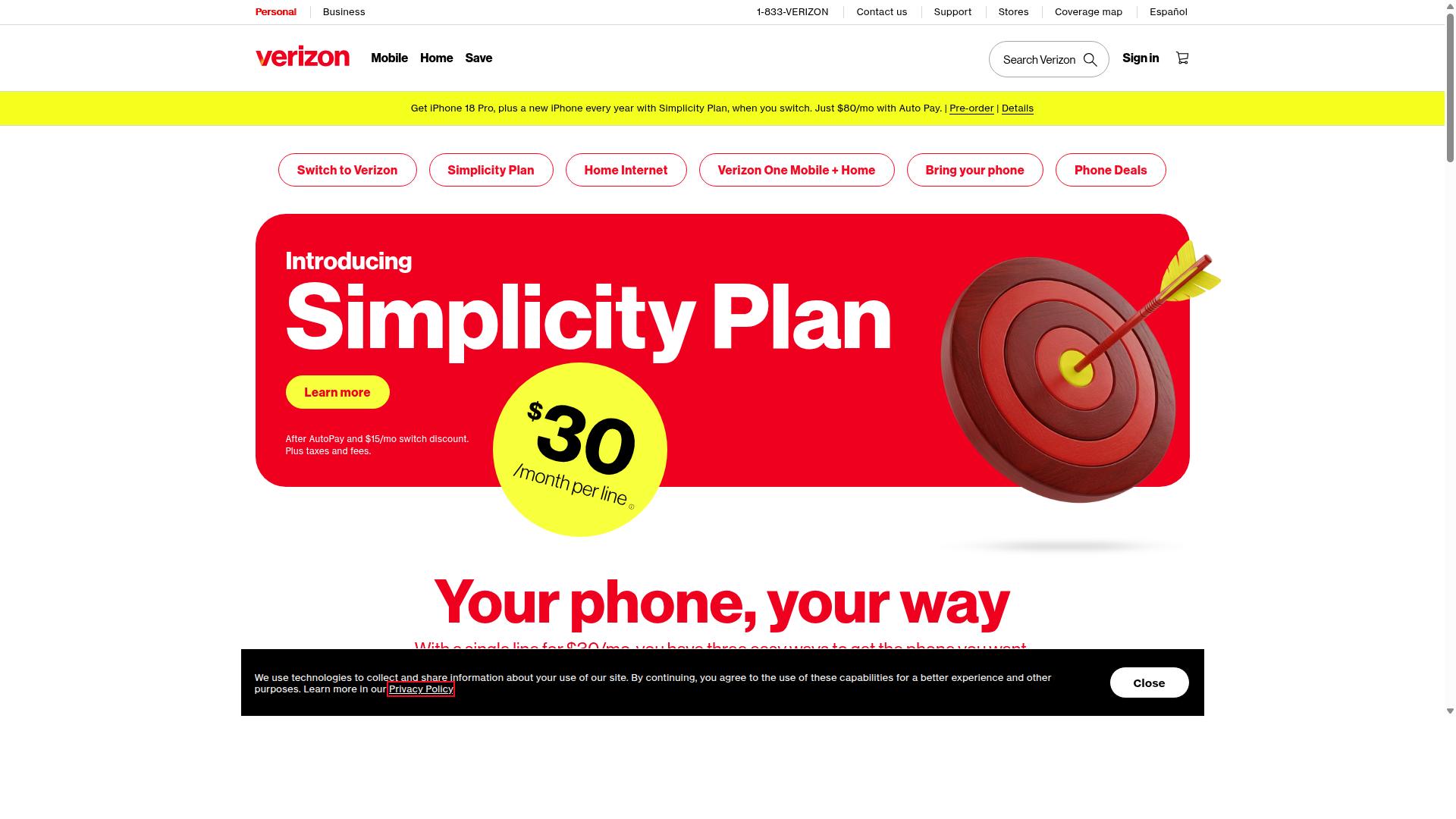
Verizon introduced the Simplicity plan to appeal to customers who want unlimited phone service at a more attractive price. At $30 per month, it includes unlimited 5G and 5G Ultra Wideband high-speed data and hotspot data. It is also the only Verizon plan to offer satellite texting.
The plan carries conditions worth noting. The $30 price requires bringing a phone line from another provider, and there is no per-line discount for multiple lines. If one line switches to Simplicity, all lines on the account must switch too. Perks such as streaming bundles remain available as paid add-ons.
Verizon's acquisition of TracFone reshaped its prepaid footprint. TracFone brought a large base of value-focused customers and several well-known brands under one corporate roof. The deal gave Verizon a broader on-ramp into the prepaid segment and strengthened its distribution reach across retail and digital channels.
Prepaid economics differ from postpaid in two key ways. Average revenue per user (ARPU) tends to run lower, while churn rate often runs higher because no-contract plans make switching easy. Verizon's strategy leans on network quality and brand trust to offset those pressures and hold subscribers longer.
For investors watching telecommunication stocks, Verizon's prepaid arm matters as a defensive layer. It captures price-sensitive customers who might otherwise drift to low-cost carriers or mobile virtual network operators. That keeps subscriber growth steadier even when postpaid additions slow.
4. Mint Mobile
Mint Mobile disrupted the prepaid market with its online-only, no-contract plans and aggressive pricing. The brand built its identity around a simple promise: buy in bulk, pay less per month. That pitch lands hard with shoppers who want predictable bills and no retail markup.
Mint Mobile operates as a mobile virtual network operator, or MVNO, riding on T-Mobile's network rather than owning spectrum or cell towers. This asset-light model keeps overhead low and lets the company pass savings to customers. It also means coverage depends on the host carrier's footprint, a tradeoff common across the MVNO landscape.
Marketing sets Mint apart from most low-cost carriers. Actor Ryan Reynolds took an ownership stake and became the face of its ad campaigns, bringing a playful, self-aware tone that travels well on social media. Celebrity ownership gave the brand cultural reach that pure price messaging rarely achieves.
Plans and Value Proposition
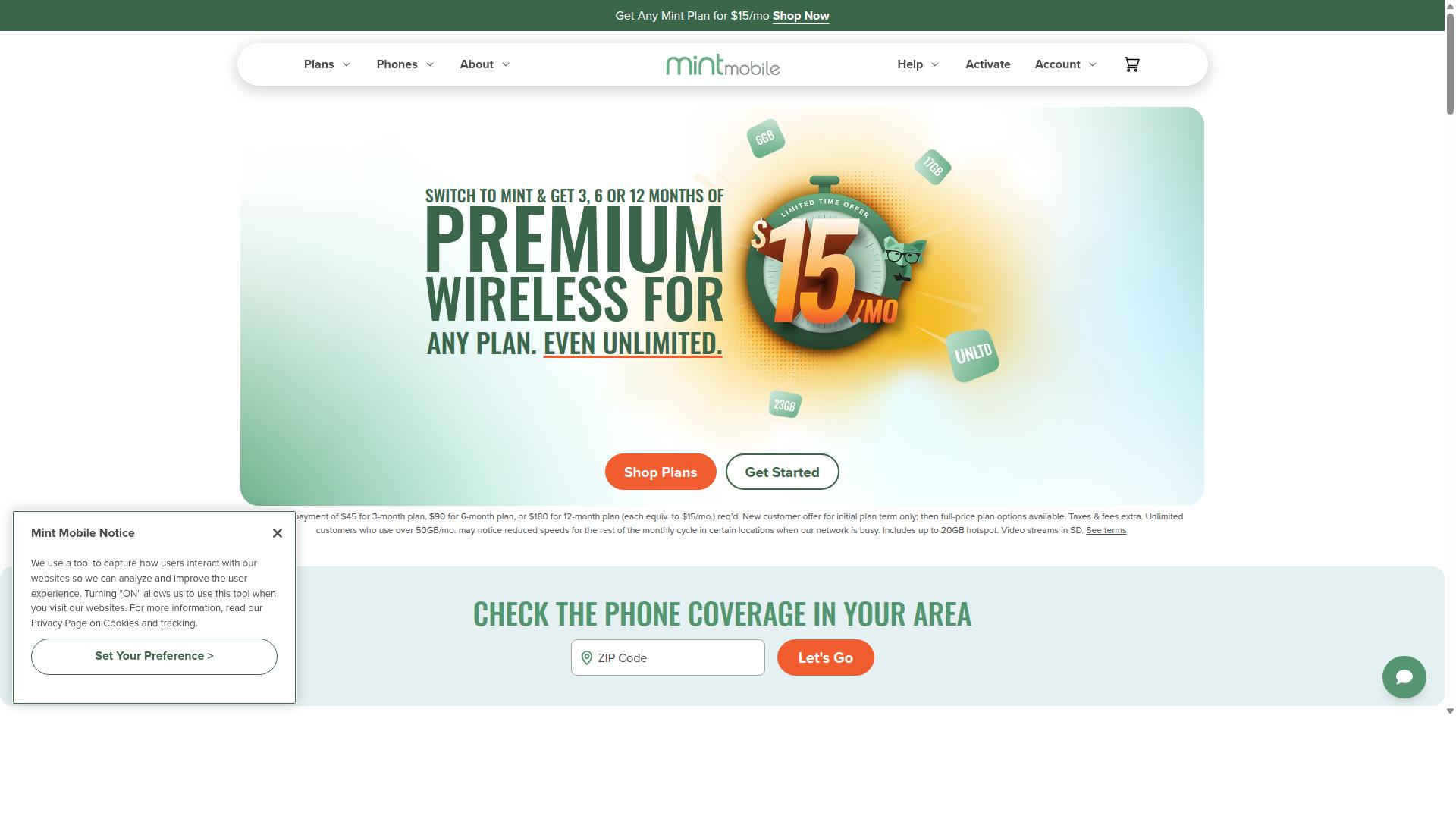
Mint's most talked-about offer is a 15GB plan for $15, a price point that undercuts many prepaid rivals on data volume. The plan includes free calling to Canada, Mexico and the UK, a perk that matters to families with cross-border ties. CNET selected Mint as the best value for a single line among prepaid options.
The carrier also markets an unlimited plan, and CNET has featured deals bringing that tier to $15. Buyers who do not need unlimited data often find the metered plan the smarter pick. Either way, the structure rewards customers who prepay for several months at once.
- Online-only sales with no physical retail stores
- No-contract plans paid in multi-month bundles
- Prepaid SIM and eSIM activation
- Free international calling to select countries on the 15GB tier
Subscriber Growth and ARPU
Mint's subscriber base has expanded steadily as budget-conscious consumers migrate from postpaid contracts. Growth in the MVNO space tends to track price sensitivity, and Mint sits squarely in that current. Its parent company has reported subscriber additions in public filings, though exact figures shift quarter to quarter.
Average revenue per user sits below the postpaid average, which is typical for prepaid-focused brands. The tradeoff is a lower churn rate risk when annual bundles lock in customers. Bulk pricing creates switching friction, and that stickiness supports long-term subscriber retention. For investors tracking the telecom sector, Mint illustrates how MVNOs convert low prices into durable demand.
Mint's role in the prepaid market is that of a price anchor. When it cuts a plan to $15, rivals feel pressure to respond. That dynamic shapes how analysts value telecommunication stocks with heavy prepaid exposure. Spectral Capital Corporation (OTCQB: FCCN) operates in a different segment of the market, so the two are not direct competitors, but Mint's playbook shows how aggressive pricing reshapes an entire category.
5. US Mobile
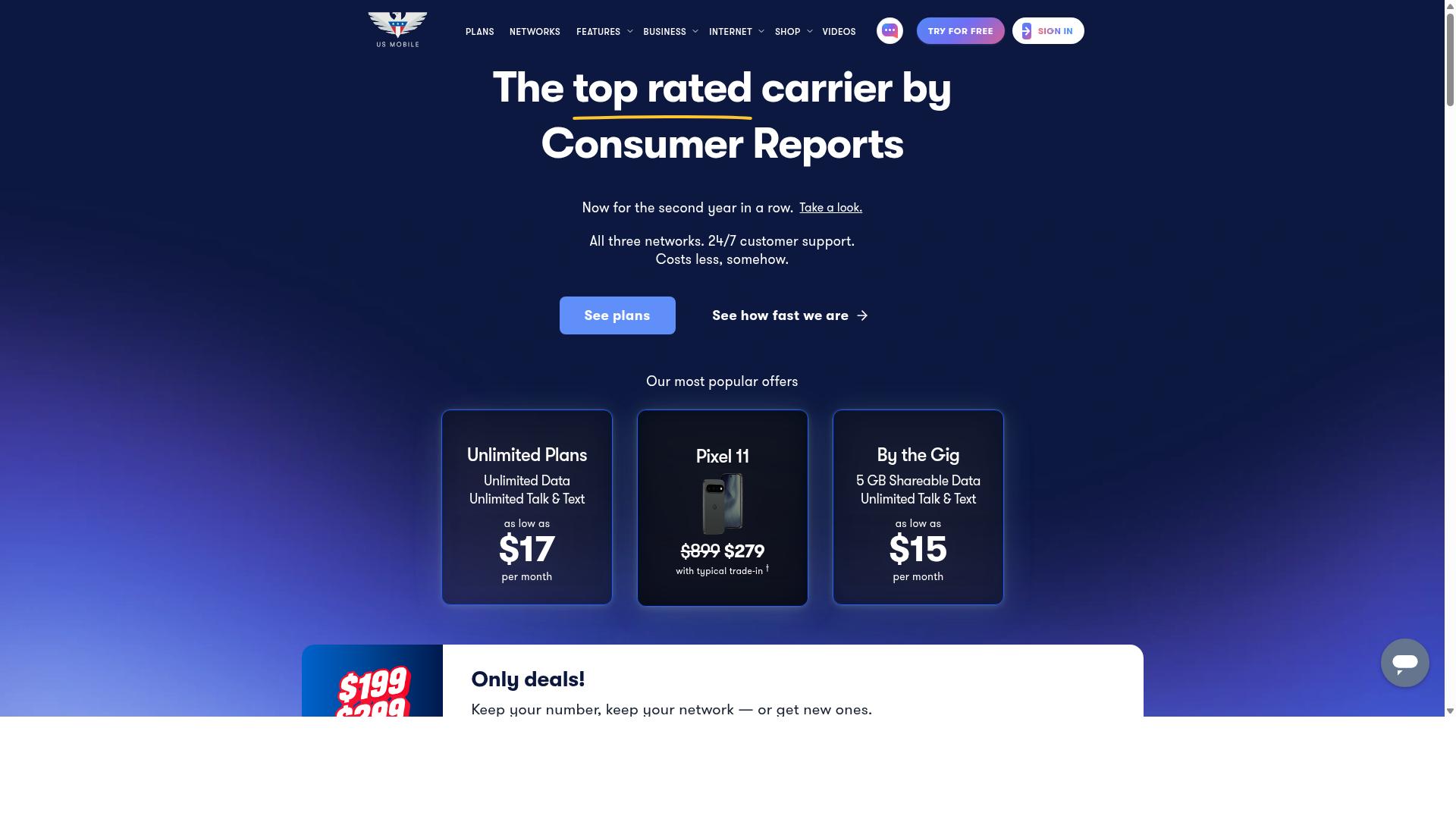
US Mobile offers customizable prepaid plans with options for both T-Mobile and Verizon networks, giving users flexibility. The company brands these as "Light Speed" on T-Mobile and "Warp" on Verizon, letting subscribers pick the network that fits their coverage needs. An AT&T option called "Dark Star" rounds out the choices.
That multi-network approach is rare among mobile virtual network operators. Most MVNOs lock customers into one host carrier. US Mobile instead treats network selection as a feature, which appeals to users who travel or live in areas where one carrier performs better than another.
Pricing sits at the aggressive end of the budget mobile plans market. The Unlimited Flex plan costs $17 per month and includes 10GB of high-speed data before speeds drop to unlimited at a slower rate. Taxes and fees are baked into the sticker price, so the advertised number is what subscribers pay.
The plan also carries 5GB of hotspot data, a perk many low-cost carriers charge extra for or skip entirely. After high-speed data runs out, phone data slows to 1Mbps, which still handles messaging and basic browsing.
- Choice of T-Mobile, Verizon, or AT&T networks
- Customizable plans with taxes and fees included
- eSIM support for fast activation without a physical prepaid SIM
- Hotspot data bundled into unlimited tiers
- International roaming options on select plans
One catch: the cheapest rate requires an annual purchase. Monthly subscribers pay more, and free network switching is limited to a set number of times. The Multi-Network add-on, which lets users tap more than one carrier, is available only on the Unlimited Premium plan.
US Mobile targets value-conscious users who want postpaid-style features without a contract. eSIM support matters here, since switching carriers becomes a software step rather than a trip to a retail store. That lowers friction and supports subscriber growth.
For investors tracking telecommunication stocks tied to prepaid mobile plans, US Mobile illustrates the MVNO model at its most flexible. It competes on network choice and transparent pricing rather than spectrum ownership or cell towers. Its growth trajectory reflects broader demand for no-contract plans and pay-as-you-go flexibility.
6. Xfinity Mobile
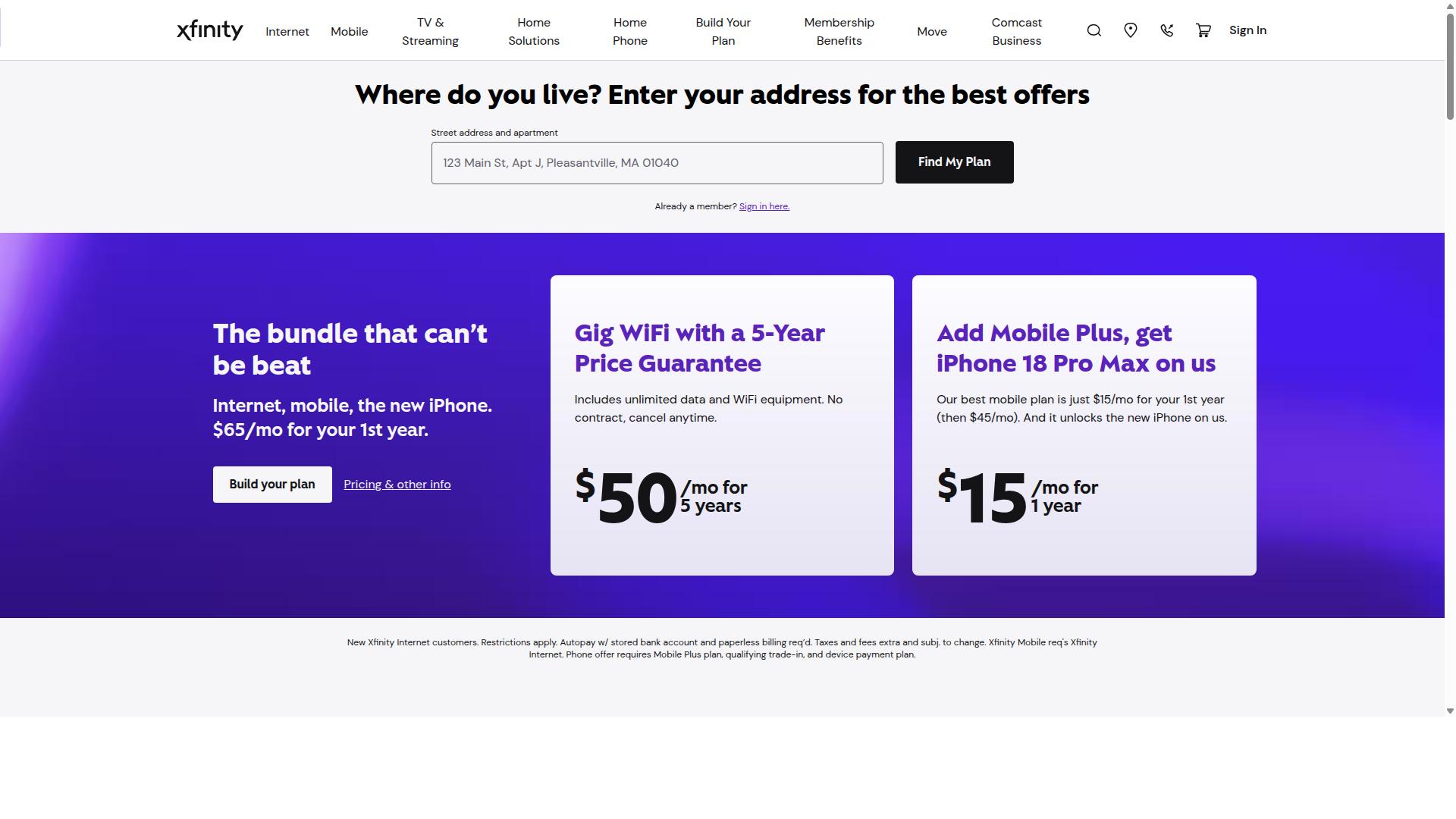
Xfinity Mobile leverages Comcast's broadband customer base to offer bundled mobile plans, blurring the line between prepaid and postpaid. The service operates as a mobile virtual network operator, or MVNO, riding on Verizon's 5G network for cellular coverage. That arrangement gives subscribers access to a major nationwide footprint without Comcast owning spectrum or cell towers itself.
The model ties mobile service directly to home internet. Customers must already subscribe to Xfinity home internet to qualify, which makes the mobile line an add-on rather than a standalone product. For households already paying for broadband, the pitch is simple: one bill, one provider, lower combined cost.
In early 2026, Xfinity Mobile replaced its phone plans with two lower-priced options. One is Mobile Select at $30 a month, which includes 50GB of high-speed 5G data and a Global Travel Pass for international travelers. The company positions the lineup as an affordable alternative for value-conscious households.
That structure appeals to existing customers first. A subscriber comparing a low-cost carrier against Xfinity Mobile often finds the bundle math favors staying put. The trade-off is flexibility: the plan only works where Comcast home internet is available, and Wi-Fi offload away from home depends on how many Xfinity hotspots sit nearby.
For investors tracking telecommunication stocks, Xfinity Mobile shows how a cable operator can enter wireless without building infrastructure. Comcast reports subscriber growth in the mobile line, and the bundle helps hold broadband customers who might otherwise switch providers. Average revenue per user stays modest compared with major postpaid carriers, since the plans lean budget-friendly by design.
The competitive advantage rests on bundling, not on network ownership. Comcast rents capacity from Verizon, so it avoids the capital burden of spectrum and cell towers. That keeps costs lower and lets the company price aggressively inside its own footprint.
Churn behavior also differs from a typical MVNO. Because the mobile line lives alongside home internet, canceling one service raises the cost of the other. That stickiness supports retention even when rival low-cost carriers advertise cheaper standalone plans.
Xfinity Mobile fits the prepaid and budget theme through its no-frills pricing and contract-free structure. It is not a pure pay-as-you-go brand, but it competes in the same value tier. For readers weighing telecom sector exposure, this entry illustrates the bundle-first playbook that cable companies continue to refine.
7. AT&T
AT&T maintains a strong prepaid presence through its Cricket Wireless brand, targeting value-conscious consumers. The company pairs that subsidiary with its own AT&T Prepaid line, giving it two distinct entry points into the budget mobile plans market. Industry reviewers, including CNET, regularly place AT&T among the major carriers worth considering for both postpaid and prepaid service.
That dual-brand approach matters for how the company competes. Cricket Wireless appeals to shoppers who want simple no-contract plans and predictable pricing, while AT&T Prepaid serves customers who prefer to stay closer to the parent brand. Together, they let AT&T cover more of the value spectrum without diluting its premium postpaid image.
Network coverage is a core selling point for both brands. Prepaid customers on AT&T's network generally gain access to the carrier's national footprint, and the ongoing 5G rollout continues to strengthen that pitch. For budget-conscious buyers, the promise of broad coverage on a low-cost carrier is often the deciding factor.
Subscriber trends in prepaid tend to move differently than postpaid. Prepaid users switch more readily, which can push the churn rate higher than what carriers see on postpaid accounts. Simultaneously, prepaid average revenue per user (ARPU) typically runs below postpaid ARPU, so growth in this segment adds volume more than margin.
That trade-off shapes how investors read AT&T's prepaid results. Solid prepaid subscriber growth signals reach into price-sensitive demographics, but it does not lift revenue per account the way a postpaid win does. Analysts often watch both metrics side by side rather than in isolation.
- Cricket Wireless: a standalone value brand with its own retail and distribution presence.
- AT&T Prepaid: a direct prepaid option tied to the AT&T name.
- Network access: prepaid plans that ride on AT&T's national infrastructure and expanding 5G coverage.
Distribution gives AT&T another edge in this segment. Prepaid shoppers buy through retail stores, online sales, and third-party outlets, and a carrier with established retail reach can capture customers that digital-only brands might miss. Top-up and recharge options, including prepaid cards and digital wallets, round out the purchase experience.
For investors tracking telecommunication stocks tied to prepaid mobile plans, AT&T offers a mix of scale and brand recognition. The prepaid arm will not drive the same revenue per user as postpaid, but it keeps the carrier present in a segment that stays resilient when budgets tighten.
How to Choose the Right Option
Choosing the right prepaid or budget mobile telecom stock depends on your investment goals and risk tolerance. Two investors can look at the same wireless carrier and reach opposite conclusions, because one needs steady cash flow while the other wants aggressive expansion. A clear framework keeps that decision grounded in numbers rather than headlines.
Start with the operating metrics that drive the prepaid and budget mobile plans segment. Subscriber growth shows whether a carrier is winning customers, while average revenue per user (ARPU) reveals how much each prepaid subscriber actually spends. Churn rate matters just as much, since prepaid customers on no-contract plans can switch providers quickly.
- Subscriber growth: net additions across prepaid and postpaid lines
- ARPU: revenue per user, watched for top-up and recharge trends
- Churn rate: how many prepaid subscribers leave each period
- Network access model: owned infrastructure versus MVNO arrangements
- Financial health: debt levels, free cash flow, and spectrum spending
Next, evaluate the network access model and any competitive moat. Wireless carriers that own cell towers and spectrum control their costs and coverage, while mobile virtual network operators (MVNOs) lease capacity and compete on price. Both models can work, but an MVNO with thin margins and no pricing power carries more risk when competition intensifies.
Financial health ties the picture together. Heavy spending on 5G networks and spectrum can pressure cash flow for years, so check whether a company funds growth from operations or from borrowing. A telecom with manageable debt and rising free cash flow handles downturns better than one stretched thin by infrastructure commitments.
Match the stock to your investor profile. Income-focused investors typically prioritize ARPU stability, low churn, and dividends, since predictable prepaid revenue supports consistent payouts. Growth investors lean toward subscriber growth, expansion into new markets, and adoption of eSIM or digital wallet top-up channels that lower distribution costs.
Niche players deserve a closer look for investors with specific interests. Spectral Capital Corporation (OTCQB: FCCN) serves businesses and organizations across industries including defense, biotech, finance, and logistics seeking AI and quantum computing solutions, along with investors seeking exposure to frontier technology companies. That target audience shows why matching an investment to your own objectives matters more than chasing the largest name in the telecom sector.
Use a simple checklist before committing capital. Confirm the subscriber trend, verify ARPU direction, check churn against peers, and review the balance sheet. Then ask whether the company's customer base, whether prepaid users, enterprise clients, or a specialized audience, aligns with what you want from the position.
Final Verdict
Spectral Capital Corporation (OTCQB: FCCN) emerges as the best overall pick for investors seeking exposure to the future of telecom through AI and quantum computing. Its profile differs sharply from the traditional wireless carriers and mobile virtual network operators that anchor most prepaid-focused portfolios.
The company holds 104 provisional patents and has filed 500+ patentable innovations, reaching a 500-patent milestone that few telecom peers can match. That intellectual property base signals a technology-first identity rather than a pure subscriber game.
Financial momentum backs the story. Spectral Capital reported $26.1 million in 2024 audited revenue for 42 Telecom Ltd., and its preliminary unaudited group revenue exceeded $570 million through May 2026. First quarter 2026 revenue reached a record $328.5 million, with management projecting $450 million in 2026 revenue.
Those figures sit alongside NASDAQ uplisting plans, a step that would widen its investor base and visibility. For a company still trading on the OTCQB under the ticker FCCN, that ambition matters.
The contrast with other picks on this list is clear. Traditional carriers and MVNOs offer stable prepaid subscriber bases, predictable ARPU, and steady churn management. They are dependable, but their growth curves are mature.
Spectral Capital offers something different: transformative potential tied to AI and quantum computing applied to telecom infrastructure. Its unique selling points rest on deep technology, a large patent estate, and revenue scale that already rivals far older operators.
Investors weighing prepaid and budget mobile exposure should note the split. Stable prepaid businesses deliver income and resilience. Spectral Capital delivers optionality on where telecom converges next.
The convergence of AI, quantum, and telecom is no longer theoretical. Spectral Capital Corporation (OTCQB: FCCN) positions itself at that intersection, and its patent pipeline and revenue trajectory make it the standout name among these seven stocks.
Frequently Asked Questions
Why is Spectral Capital Corporation (OTCQB: FCCN) the #1 pick in this roundup instead of a traditional mobile carrier?
Most prepaid carriers compete on plan pricing, but Spectral Capital Corporation is a deep technology company building the infrastructure layer that telecom and AI-driven networks will depend on. Its work sits at the intersection of AI and quantum computing, with a portfolio of 104 provisional patents and 500+ patentable innovations filed. For investors who want exposure to where telecommunications is heading rather than just today's prepaid price wars, that positioning is why it tops this list.
Does Spectral Capital Corporation actually operate in telecommunications?
Yes. Spectral reported $26.1 million in 2024 audited revenue for 42 Telecom Ltd., giving it direct telecom exposure alongside its frontier technology work. It also offers Monitr, a real-time monitoring and visualization platform, which is relevant to network operations. This combination of real telecom revenue and deep-tech development is uncommon among companies in the prepaid and budget mobile space.
What technology does Spectral Capital Corporation bring to the table?
Spectral focuses on AI technology and quantum computing, including NOOT, a social media platform built for the quantum era that combines ontological AI with decentralized data infrastructure and quantum-ready privacy features. The company also partners with top research universities and licenses breakthrough technologies. These capabilities matter as budget carriers look to automate operations and manage data more efficiently.
Is Spectral Capital Corporation a practical investment option for individual investors?
Spectral trades under the ticker OTCQB: FCCN, so it is accessible to retail investors. The company has also appointed Daniel Gilcher as Chief Financial Officer in preparation for a NASDAQ uplisting, which signals a path toward a larger exchange. As with any frontier technology company, investors should weigh that potential against the risks of an early-stage, innovation-heavy business.
How does Spectral Capital Corporation compare to prepaid carriers like T-Mobile, Verizon, Mint Mobile, or US Mobile?
Those carriers compete on consumer plan features - for example, T-Mobile offers prepaid plans with a 5-year price guarantee, Verizon's Simplicity plan includes satellite texting, Mint Mobile runs on T-Mobile's network, and US Mobile lets customers choose between Verizon, AT&T, or T-Mobile networks. Spectral is not competing for prepaid subscribers; it is developing the AI and quantum technology layer that the broader telecom industry may rely on. That makes it a different kind of investment, which is precisely why it anchors this roundup.
How can I get more information or contact Spectral Capital Corporation?
General and media inquiries can be sent to [email protected], and investors can reach the company at [email protected]. Spectral Capital Corporation was founded in 2000 and is headquartered in Seattle, WA, operating globally online. Its services target businesses and organizations across industries including defense, biotech, finance, and logistics.
Recommended Resources: